Pakistan loses more than $ 1 Billion to the illegal cigarette trade every year
Behtareen Pakistan is a nationwide civic awareness and advocacy campaign focused on accountability, transparency, and economic responsibility. It highlights the hidden costs of illegal cigarette trade, exposes lost public revenue, and uses data and insights to show how this issue impacts Pakistan’s economy while advocating for fair and effective enforcement of laws.
Pakistan Tobacco Industry Overview
The tobacco industry in Pakistan is substantial yet significantly unregulated. With nearly 80 billion cigarettes consumed annually, it offers both economic potential and serious challenges, particularly due to the activities of the illegal cigarette mafia. Below is an overview of Pakistan's tobacco market.
The Problem
The illegal cigarette and tobacco economy refers to the production, import, distribution, and sale of cigarettes that evade government taxes, regulations, or licensing requirements.
The Situation in Pakistan
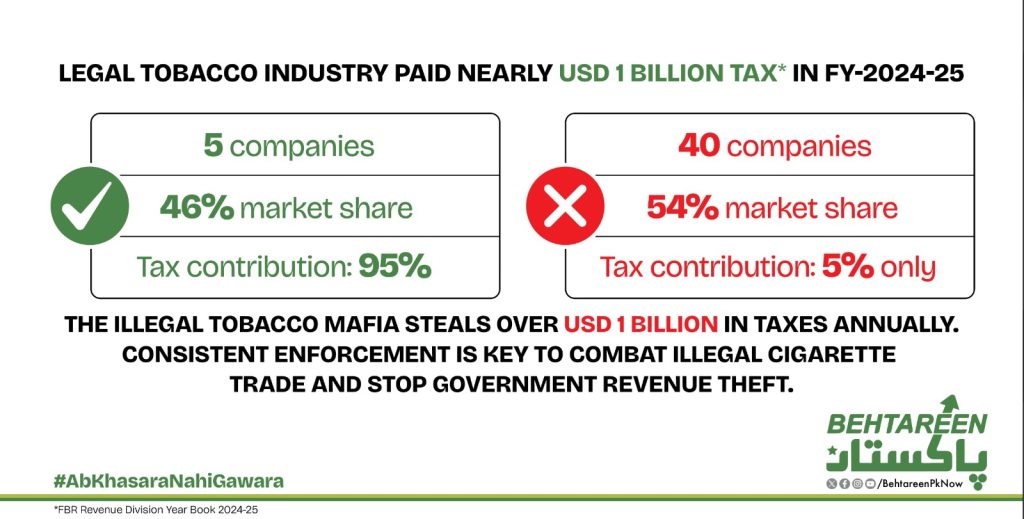
In Pakistan, the illegal cigarette market has expanded significantly in recent years and now occupies over 50% of the overall tobacco market.
Did You Know?
Illegal cigarettes in Pakistan can originate from both smuggling networks and unregistered local manufacturing facilities.
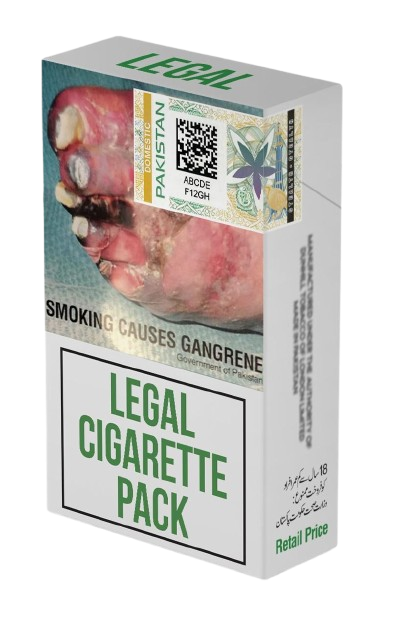
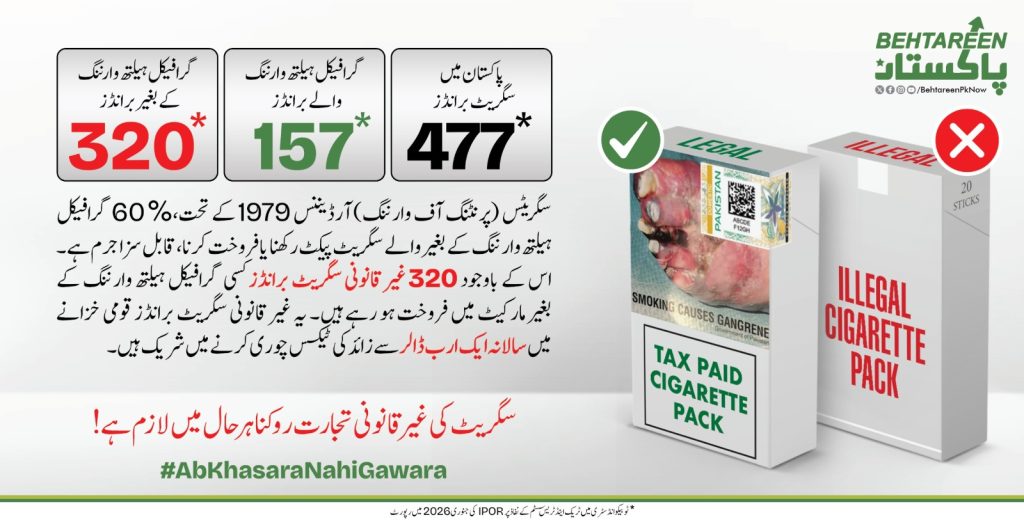
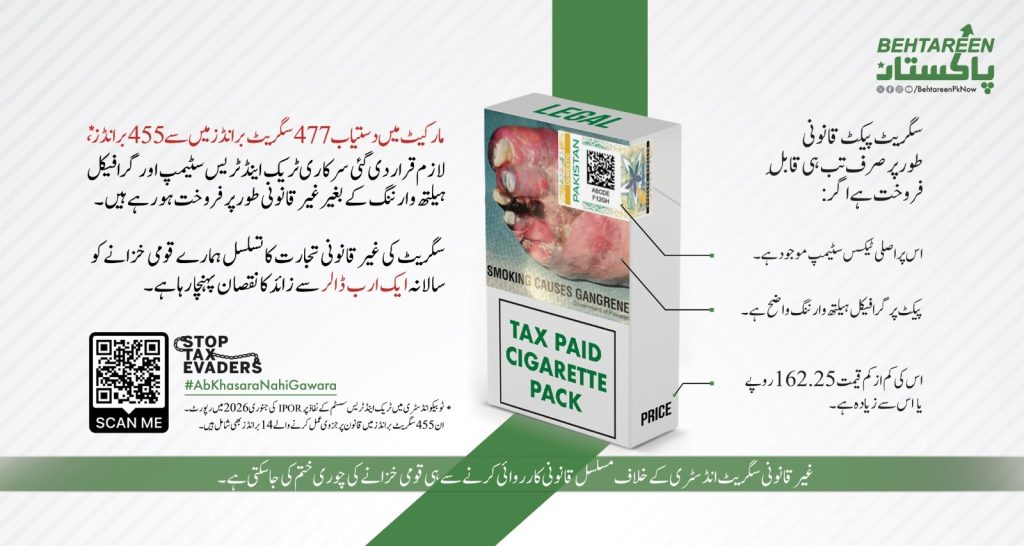
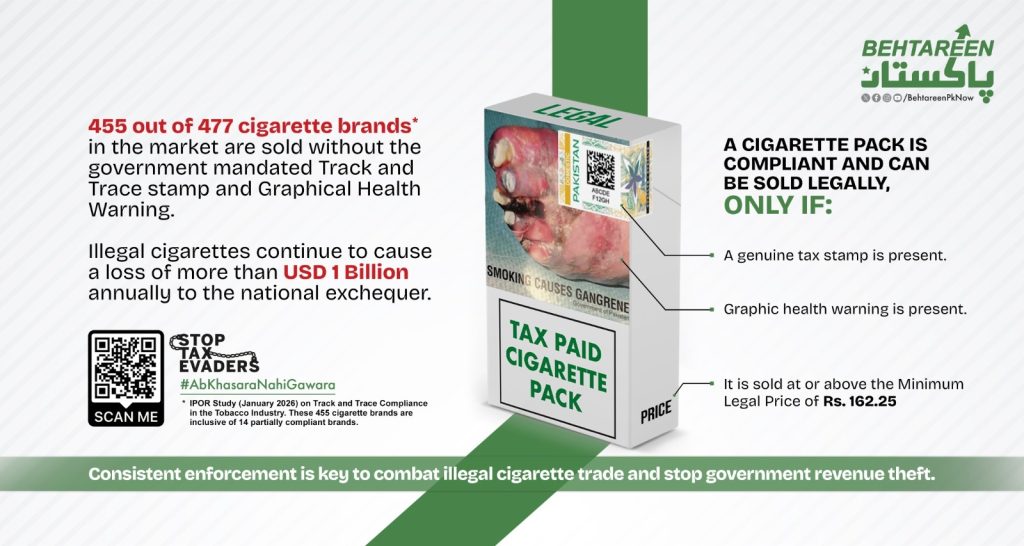
How to Identify a Legal Cigarette Pack?
A legal cigarette pack can be identified by several clear indicators that ensure authenticity and compliance with government regulations. These typically include a valid tax stamp or excise label, clear and correctly printed health warnings, standardized packaging elements, and accurate manufacturer information.
Statistics
The scale of Pakistan's illegal cigarette trade is staggering. The numbers below reflect the real-time cost of unchecked illegal tobacco.
Graphical Health Warning
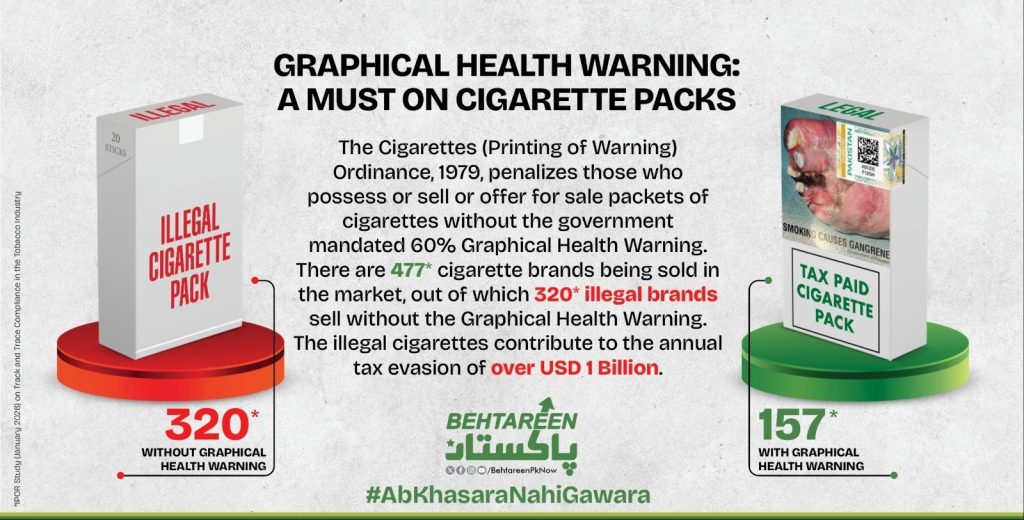
320
Illegal cigarette brands being sold in the Pakistani market without the government-mandated Graphical Health Warning
Minimum Legal Price
392
Illegal cigarette brands being sold in the market below the government-mandated Minimum Legal Price of Rs. 162.25
Track and Trace Stamp
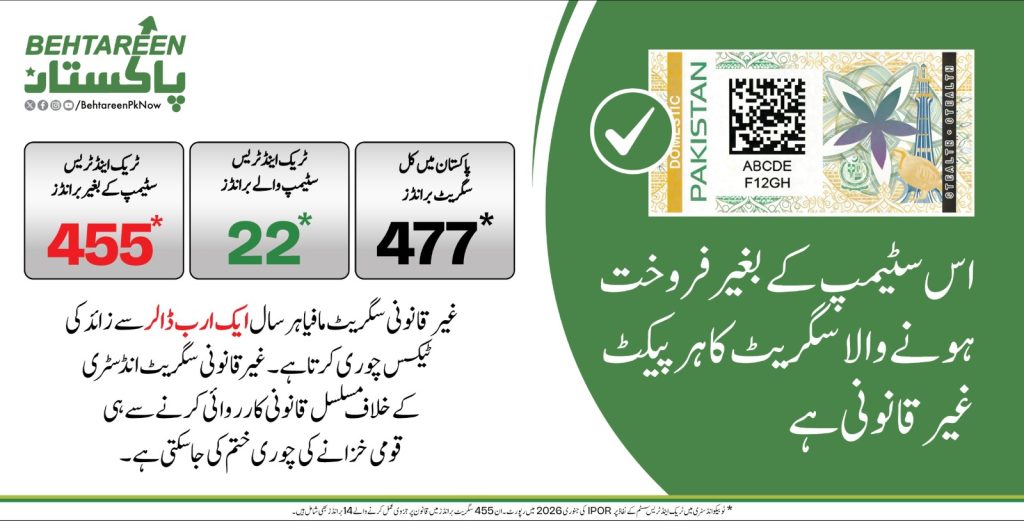
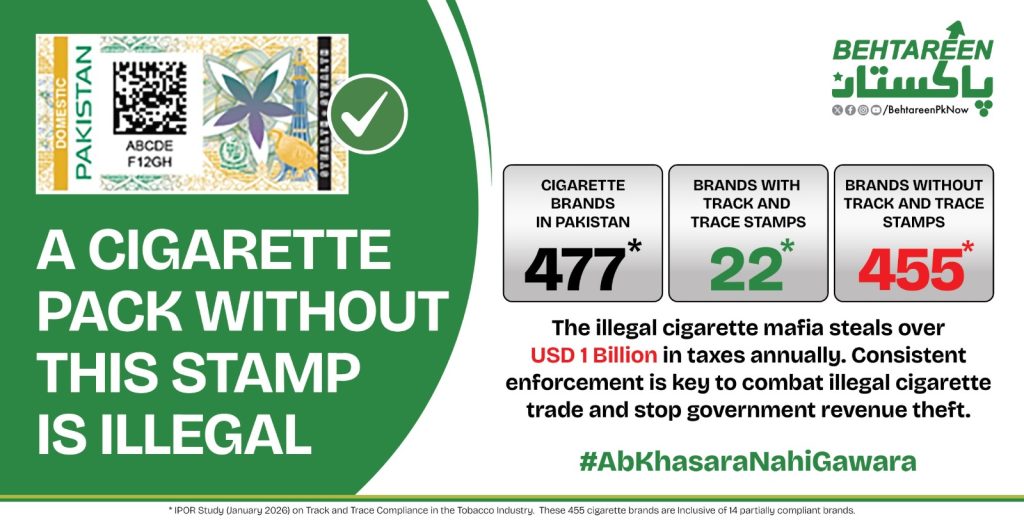
455
Illegal cigarette brands being sold in the market without the government-mandated Track-and-Trace Stamp
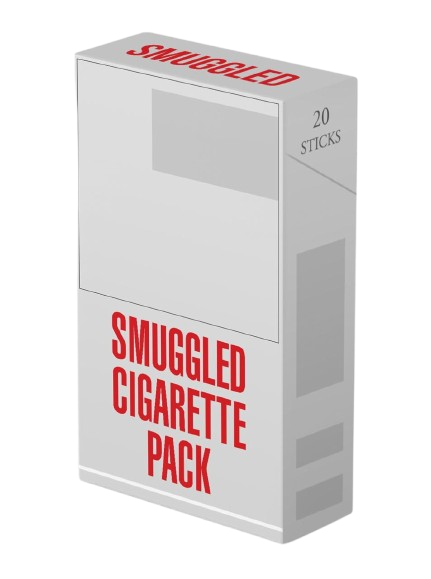
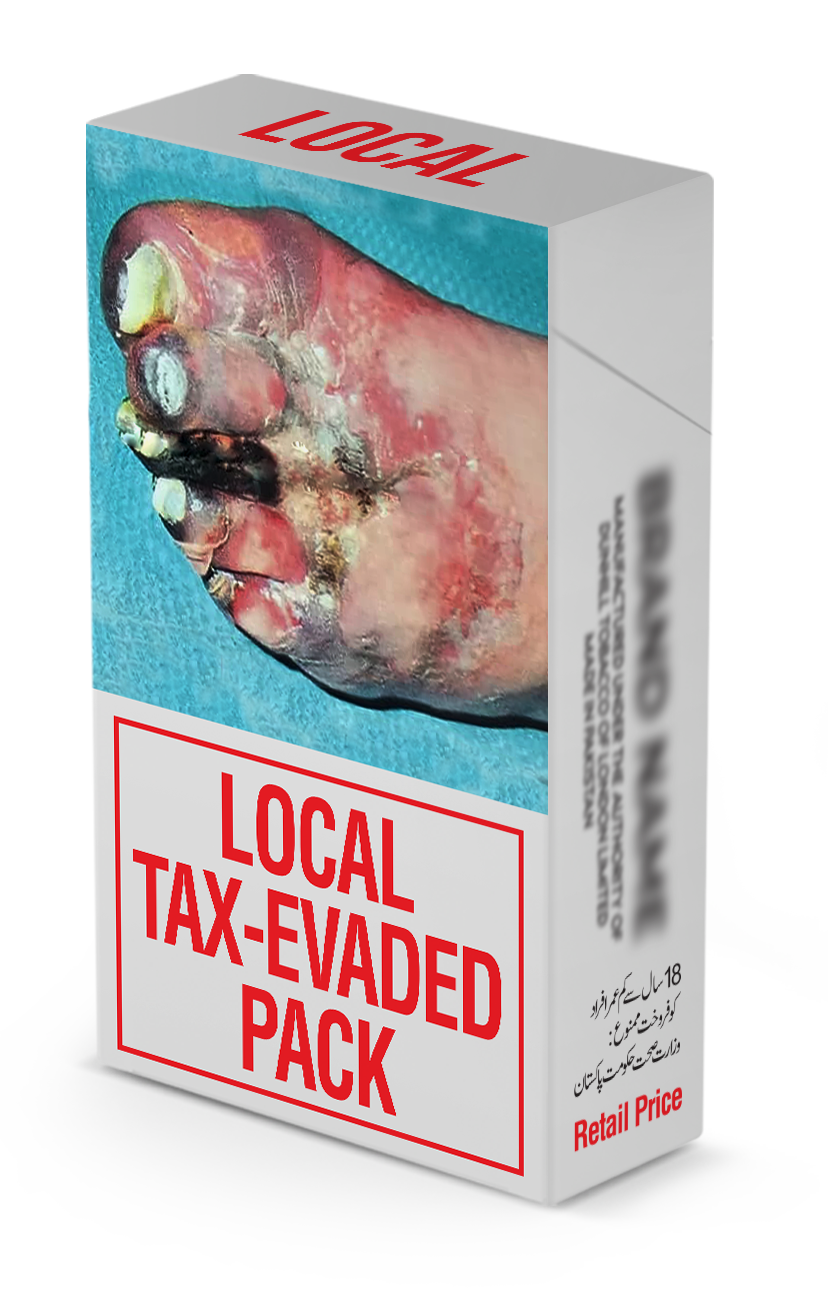
How to Identify an Illegal Cigarette Pack?
Illegal cigarette packs bypass government regulations and quality controls, making them unsafe and unlawful. These packs are often produced or distributed without proper authorization, meaning they fail to meet health, safety, and taxation standards, exposing consumers to unverified contents while governments lose critical tax revenue.
How The Revenue Loss Happens
This timeline outlines the typical journey of illegal cigarettes through the supply chain, from production or smuggling, to distribution, retail sale, and eventual tax revenue loss.
Illegal cigarettes may be:
- Manufactured in unregistered local factories, or
- Smuggled into the country without paying customs duties and federal excise tax.
Because these products are not declared properly, they enter the market without contributing to government revenue.
After production or smuggling, products are distributed through:
- Informal wholesalers
- Unregulated transport routes
- Cash-based supply networks
These channels operate outside official monitoring systems, making it difficult to track product movement.
Illegal cigarettes are then sold in retail outlets alongside legal brands. Consumers may not immediately distinguish between compliant and non-compliant products.
Retailers may stock illegal brands because:
- They offer higher profit margins
- They are cheaper to purchase
- Enforcement checks may be limited
Because taxes and compliance costs are avoided, illegal cigarettes are often sold below the government's minimum legal price.
Lower prices make these products attractive to price-sensitive consumers and increase market share for illegal brands.
Illegal products often show visible signs of regulatory non-compliance, such as:
- Missing Track and Trace tax stamps
- Absence of required Graphical Health Warnings
- Incorrect or incomplete packaging information
- Retail price below the Minimum Legal Price threshold
These indicators suggest that required taxes and regulatory steps have been bypassed.
When cigarettes move through this chain without paying required taxes or complying with regulations, the government loses excise revenue that would otherwise contribute to public finances.
At scale, repeated leakage across production, distribution, and retail results in billions of dollars in lost tax revenue annually.
Laws and Compliance
Pakistan’s tobacco industry is governed by regulations designed to ensure tax compliance, proper monitoring, and adherence to public health standards. This section outlines key requirements, including Track and Trace, Graphical Health Warnings, Minimum Legal Pricing, and enforcement measures related to non-compliance.
Track and Trace Stamp (TTS) is a regulatory mechanism introduced by the Federal Board of Revenue (FBR) in Pakistan to monitor the legal production and movement of cigarette products. It requires that every pack of cigarettes has a unique tax stamp before leaving the factory, enabling authorities to track it throughout distribution and sale.
Why It Exists
The system was made mandatory on July 1, 2022 to curb tax evasion and prevent illegal products from entering the legal supply chain. By requiring identification at each stage of production and distribution, TTS aims to stop cigarettes from being sold without paying due taxes.
What Compliance Looks Like
To be compliant, a cigarette brand must:
- Have the official FBR Track and Trace tax stamp affixed on every pack
- Ensure stamps cannot be removed or tampered with
- Register products with the FBR before sale
Current Compliance Challenges
Recent surveys show that only a small fraction of brands in the market fully comply with the Track and Trace requirements. Studies reveal that out of more than 413 brands, only 19 were fully compliant, while most were sold without tax stamps.
Why Non‑Compliance Persists
Even though the system exists, enforcement remains weak. Retailers often sell products without stamps, and many locally produced or smuggled brands bypass the monitoring entirely. Increasing compliance requires stronger enforcement at the retail and supply chain level.
Track and Trace
A Graphical Health Warning (GHW) refers to large, mandatory health warning images and text printed on cigarette packaging. These warnings inform consumers about the health risks associated with tobacco use.
Legal Requirements
Pakistan’s tobacco control laws mandate that cigarette packs display clear, pictorial health warnings covering a significant portion of the package. This requirement was introduced to improve public awareness of the harms of smoking.
What Compliance Looks Like
To comply, packs must:
- Display approved pictorial warnings
- Use the correct size and placement as defined by law
- Include these warnings on both front and back
Issues With Compliance
Research shows that most brands in the market either lack the required graphical warnings or have no warnings at all. Only a minority of products surveyed featured government‑mandated warnings.
Why This Matters
Without proper health warnings, consumers, especially young or low‑income smokers, may be unaware of smoking risks. Lack of enforcement also suggests wider regulatory gaps within the tobacco control system.
Graphical Health Warning
The Minimum Legal Price (MLP) is the lowest price at which cigarettes may legally be sold in Pakistan. This rule ensures that tobacco products are sold at prices that reflect all taxes and regulatory costs.
Why It Is Important
Minimum pricing prevents cheap cigarettes from being used as a loophole for tax evasion. It also reduces consumption by eliminating artificially low prices that attract price‑sensitive smokers.
Compliance Requirements
To be compliant, sellers must:
- Price cigarette packs at or above the mandated minimum rate (e.g., Rs. 162.25 per pack in recent surveys)
- Ensure prices reflect all duties and taxes
Enforcement Challenges
Many brands are sold well below the minimum legal price, with prices reported as low as Rs. 40 per pack. This widespread undercutting not only violates the law but also leads to significant revenue loss.
Impact of Violations
Selling below the MLP undermines both revenue collection and public health goals. It signals lack of point‑of‑sale enforcement and weak regulatory monitoring.
Minimum Legal Price
The tobacco laws in Pakistan include provisions for penalties against manufacturers, importers, and sellers who fail to comply with Track and Trace, Graphical Health Warning, and Minimum Legal Pricing rules. Penalties may include fines, confiscation of goods, and legal action.
Enforcement Authorities
The Federal Board of Revenue (FBR), Customs authorities, and relevant provincial enforcement agencies are responsible for monitoring compliance and taking action against violations. They perform inspections, seize illegal products, and can pursue legal cases.
Regulatory Oversight
The FBR, Customs authorities, and relevant provincial enforcement agencies are responsible for monitoring compliance and taking action against violations. They perform inspections, seize illegal products, and can pursue legal cases.
Enforcement Challenges
Despite clear laws, enforcement remains inconsistent. Many retailers sell non‑compliant and illegal cigarettes without fear of penalties, and few cases of legal action are reported. Some industry representatives even note that no one has been penalised for violating minimum price laws despite widespread violations.
Why Non‑Compliance Persists
Effective enforcement ensures:
- Fair competition for legal producers
- Protection of government tax revenue
- Better compliance with public health laws
Penalties and Powers
Share A Lead
Note: We will respond via the contact details provided as soon as we can
Media and Reports
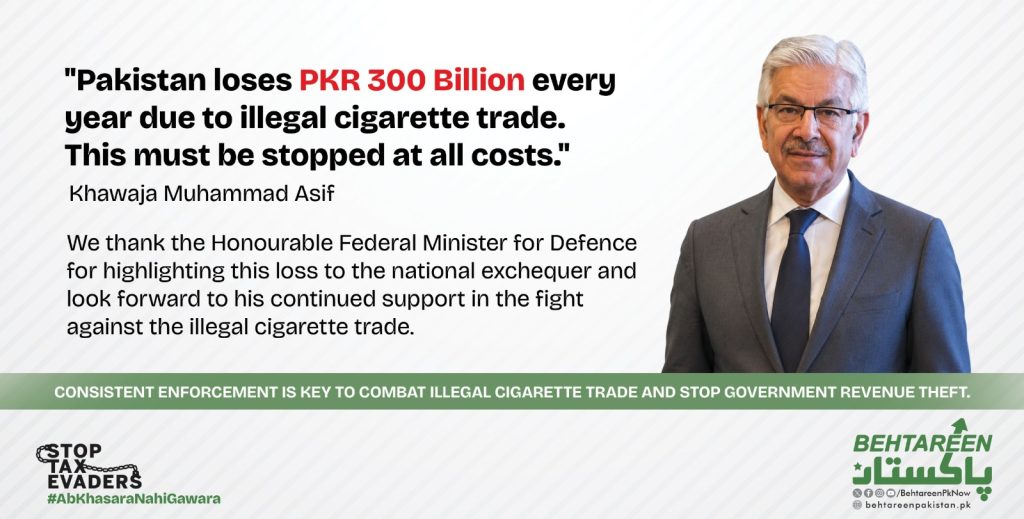
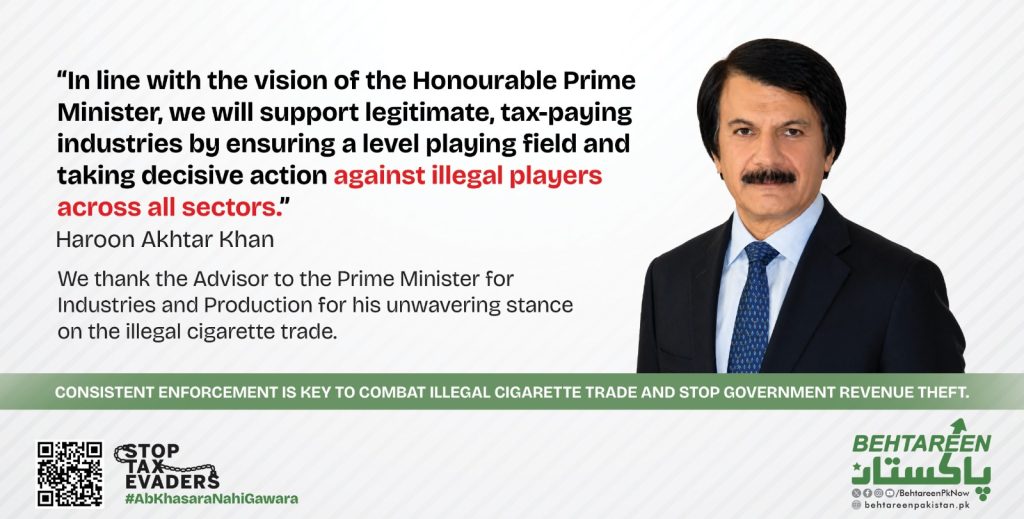
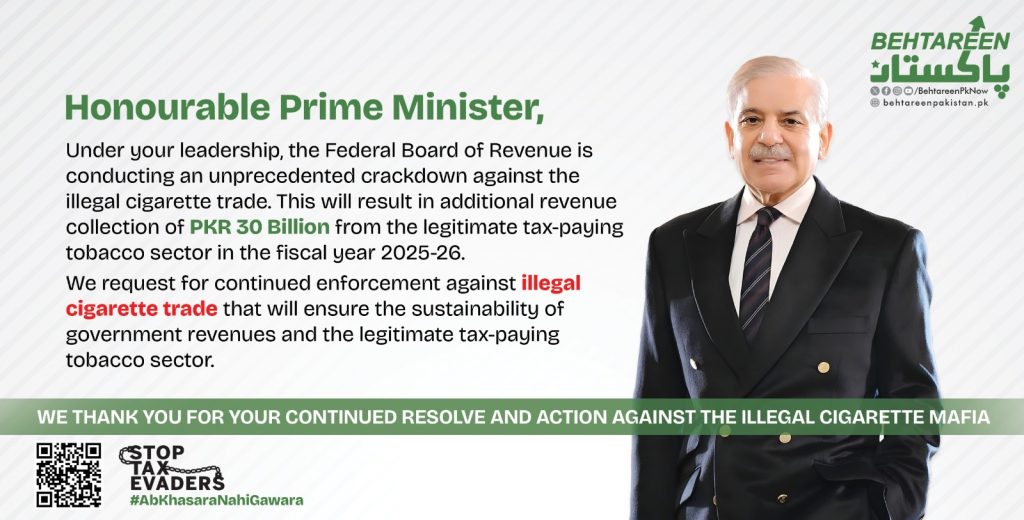
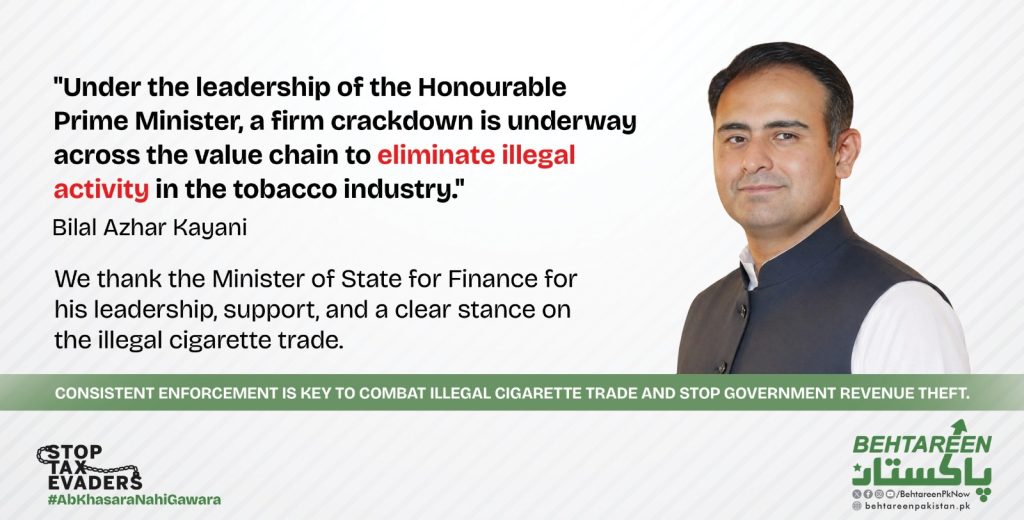
Behtareen Pakistan runs awareness campaigns to highlight the economic damage caused by the illegal cigarette trade in Pakistan. These campaigns aim to educate the public about how tax evasion, smuggling, and the sale of untaxed cigarettes deprive the country of billions in revenue every year.
Frequently Asked Questions
Over 50% of cigarettes sold in Pakistan are illegal or non-compliant, costing the country more than USD 1 billion in lost tax revenue every year. Our FAQ page answers 20 questions on the Track and Trace System, Minimum Legal Price, Graphical Health Warnings, and how to identify and report illegal cigarettes across Pakistan.
A Public Awareness Initiative By
Pakistan Tobacco Company Limited
Stop This Loss!
The illegal cigarette trade costs the government over $1 Billion each year in lost revenue. In reality, the size of this illegal market is even larger. To address this issue effectively, there is a pressing need for ongoing enforcement actions to prevent further revenue loss.
Links
Contact Information
info@behtareenpakistan.pk
Subscribe To Our Channel
Follow Us On Facebook
Follow Us On X
Follow Us On Instagram
Legal
Privacy Policy